
Brace for Impact: When Your First Unit Isn’t What You Expected
“Who the f*** are you?” Surprised and a little taken aback, I calmly explained to my future Warrant Officer that I was the incoming PL and had been assigned as the investigating officer for a financial liability investigation into property loss. He simply replied, “No, I don’t know s*** about that stuff” and turned away. Having only reported to my first unit a few days earlier, I knew I was in for a rough ride.
This unit had recently returned from a Europe rotation where a pervasively toxic culture combined with the isolation of COVID produced a massive scandal. It quickly became public, leading to the removal of the battalion leadership and several GOMARs throughout the formation. The news spread like wildfire across the aviation community, and while I initially joined in disbelief in the absurd details of the scandal, I wondered how the unit would respond.
The initial interaction with my Warrant Officer quickly answered that question. In case I held any lingering hopes for the unit, a week later, as I was publicly introduced to the company, a senior Warrant Officer immediately asked “Are you a f***ing f*****?” in front of the formation. These “Welcome to the Army” moments were just the prelude. Over the next year, I faced Soldiers who didn’t follow orders and were openly disrespectful, leaders who mocked and humiliated the LTs in public, and a culture dominated by pessimism, cynicism, and bitterness. As a young leader, I was miserable.
My immediate reaction to this toxic culture was to fall back on my training and confidence in myself. I believed that if I simply put my head down, proved my competence, and delivered better outcomes for the Soldiers and Warrants that I would ultimately earn their respect. I believed it so fervently that I committed to it for a full year. Instead of taking stock of my surroundings, each new conflict or setback convinced me to simply work harder. But while I produced great administrative work, I wasn’t leading. I was simply waging war on an unending stream of bureaucracy from ground vehicle maintenance to property to CONOPs. Meanwhile, my relationships with my Soldiers and Warrants remained frayed at best and non-existent at worst, all while I felt increasingly burnt out.
As a cadet, I studied books like Black Hearts where we explored the horrific consequences of leadership failures and toxic climates at their most extreme. While useful, these case studies created some critical blind spots. First, they almost always focused on the most severe versions of immorality that organizations face, typically exacerbated by combat. Today’s young leaders are far more likely to face the nuances of a toxic garrison. Second, these stories fixated on the root causes and immediate consequences of toxic climates while often ignoring the stress in navigating them and the aftermath. As a result, I felt like I entered the Army unprepared to pick up the pieces of a broken unit.
You may be expecting a tale of a young LT’s triumph over an Army he wasn’t ready for, but this is not that story. What follows are the lessons of failure: hard earned and not easily forgotten. Although I did not fail in terms of outcomes, outputs, or raw results, my early missteps prevented me from truly leading. Instead of being a change agent, I was simply a participant. It is often said, “we learn the most from failure,” so why not learn from someone else’s?
Lesson #1: A Leader Builds Bridges
My strategy to address the toxic culture failed primarily because, in the midst of all that administrative work, I failed to invest time in connecting with my Soldiers and Warrants. I worked through every lunch, convinced that they would eventually recognize how hard I labored on their behalf, and all would be made right. I would have been better off eating lunch in the pilots’ office.
It wasn’t until we deployed to Iraq that the walls came down and the bridges were established. Since we worked out of the same cramped tent, I started having significantly more touchpoints across the formation. Slowly but surely, through video games, movies, and conversations about life, I began to build a bridge across the gap between us.
Unfortunately, bridges aren’t built in a day. Counselings alone are insufficient, and one-off conversations will be cynically derided as a technique from a leadership book. Bridges and meaningful relationships require commitment and personal investment of time and energy. Most importantly, a leader has to care: care about where someone is from, what their spouse’s name is, how old their kids are, and where they want to go in their Army career. This can only be accomplished through intentional efforts, presence, and authenticity. Get started early!
Lesson #2: You don’t have to be Dick Winters
Upon reflection, my lack of presence, though well intentioned, was apparent. Conversely, I felt confident that I had at least been authentic to myself along the way. This belief was shaken in my first OER out-brief in Iraq. My most influential junior Warrant Officer started by acknowledging how our relationship had improved, but then caught me off guard, asserting he didn’t trust me enough to “follow me” before because he didn’t know who I was as a person.
He shared a story with me about his time in the Marine Corps. One of his good friends, who was a fantastic Marine, got promoted and became a squad leader, yet as soon as he made this jump, he immediately lost everyone’s trust. This squad leader spent so much time acting like the leader he thought he was supposed to be that he forgot to be himself. In being correct, proper, and principled in every single interaction, he became inaccessible and robotic.
Similarly, because I spent so much time in my office grinding, doing what I thought a good PL should do, my Soldiers didn’t know who I was as a person. All my decisions and actions had to be interpreted from the few formal interactions we had. This gap between perception and reality gave room for speculation and cynicism to run rampant. The pressure to be the ideal leader who did all the right things prevented me from being authentic. They never saw me decompressed, cracking jokes and being the most genuine version of myself.
Ultimately, Soldiers want to follow a person, and people are not perfect. This realization helped me shed the weight of perfection and simply lead as Gene and not LT Thagard. I learned that as long I cared deeply, Gene was a better officer than LT Thagard would ever be.
Lesson #3: This too shall pass.
The last, and perhaps the most difficult lesson, is to maintain perspective. Perspective has three primary variations: properly weighing events, finding the right viewpoint, and appreciating the power of time.
Placing events in perspective is exceedingly challenging for young leaders because as LTs, most of us simply haven’t seen enough of life or the Army. Within weeks, burnt out and disillusioned, I was asking my senior PL, “Is this really all there is?” Within months, I was questioning all the decisions I’d experienced during this challenging time, steadily losing faith in myself. Up to this point, I’d operated in the relative safety of West Point and TRADOC. I was unprepared for the real world, and when I was confronted with an ugly reality, it made me question my own. The ideal Army I studied and expected disappointed, but that wasn’t a bad thing. It was opportunity.
Instead of sulking in self-pity and feeling cheated of a more typical Army experience, I should have taken stock of the situation and changed my point of view. I spent so much time focusing on the negatives that I failed to realize no one else had been here before either. The previous leadership had largely been cleared out, and everyone was now thrust into this new environment of someone else’s creation. There was no villain to blame, just a bunch of people trying to figure it out. There was so much opportunity to hunt the good stuff because I was surrounded by good Soldiers and challenging training that offered me a chance to grow. I was too busy knocking down 25m targets to look around.
Slowly but surely, as the first year became the second, I began to see the light and improve as a leader. I learned that culture is small, repeated actions performed consistently over time, and though the gears of culture turn slowly, they do turn. All those moments of acute failure, extreme frustration, and high emotion were mellowed with the passage of time. The adversity that dominated my life ultimately became a foundational part of my journey, shaping my subsequent leadership as an executive officer and commander. Now, I wouldn’t change it for the world.
Leadership is hard. While West Point, ROTC, OCS, and TRADOC try to replicate the operational Army, they simply can’t. Whatever unit you join, it will have its challenges. Poor leaders, exhaustion from high OPTEMPO, imperfect systems, and toxic climates exist throughout all organizations, including the Army. Those challenges will create difficult decisions and hard times, but it is important to remember those units need good, caring leaders the most. By building relationships, being your authentic self, maintaining perspective, and giving it a little time, you can meet the moment. If you’re lucky, you’ll emerge on the other side a better leader.
_____________________________________________________________________________________________________________________________________________________________________
CPT Gene Thagard is an aviation officer, AH-64E pilot-in-command, and West Point graduate (’19). He most recently commanded Delta Troop, 5-17 Air Cavalry Squadron, 2D Combat Aviation Brigade in Camp Humphreys, South Korea and has previously served as an attack platoon leader, Grey Eagle executive officer, production control OIC, and battalion executive officer.
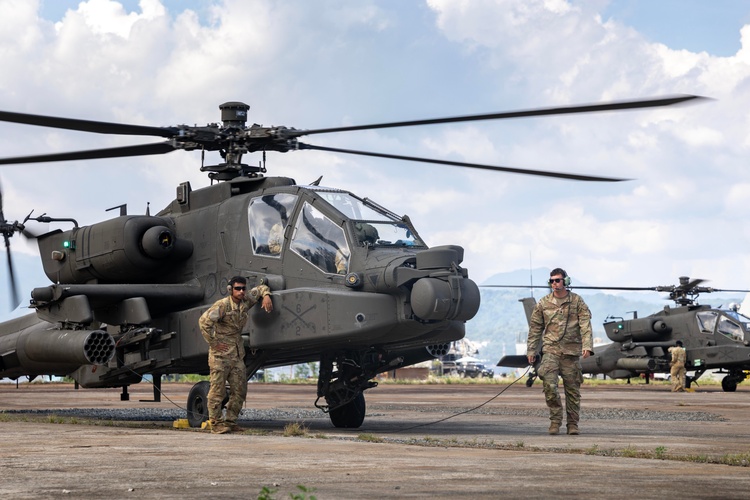
Photo: Courtesy of DVIDS. SGT Olivia Cowart. 19 June 2026. 25th Combat Aviation Brigade.


