Great Commanders Ask Great Questions

I was sitting in another routine meeting. My commander sat at the head of the table, quietly absorbing the brief and jotting down the occasional note. Because I already knew the topic and the various courses of action inside and out, my mind started to wander—not out of boredom, but out of curiosity. I started watching her process.
As the briefing went on, she’d throw out a basic clarifying question here and there. Nothing groundbreaking. But the moment we finished presenting all the options, she pivoted. She rattled off a quick, sharp list of questions that bypassed simple clarification and cut straight to heart of the decision.
That was the lightbulb moment for me: this is the actual essence of command. It’s inquiry.
Command takes a lot of forms, but at its core, it is a non-stop loop of listening, absorbing, analyzing, questioning, and deciding. The questioning is the bridge that gets you to the decision. Ultimately, a leader’s success almost always hangs on one skill: the ability to ask the right question at the exact right moment.
The Commander’s Edge: Mastering Decision-Making Through Inquiry
A commander’s role is unique, with no true civilian equivalent. They have the final say in planning, execution, organizational direction, misconduct, and many other responsibilities that defy enumeration. A military commander is responsible for everything a unit does, decides, achieves, and fails to achieve. Most commanders, regardless of echelon, will consider input from their staff, junior leaders, and senior enlisted advisors; however, decisions ultimately rest solely with them. How can one person possibly be expected to hold such a prominent role in any organization, particularly one as consequential and unpredictable as the military? How can one leader find the time, energy, and mental stamina to keep pace with such a task? Great commanders master the art of decision-making by asking well-timed, structured, and concise questions to the right audience.
In high-stakes environments, decisions hinge on clarity, timing, and insight—qualities shaped by inquiry. Military decision-making processes are designed to consistently illuminate and distill complex problems in a concise manner. FM 5-0 highlights the commander’s role in the planning process, nesting “visualize, describe, and direct” within their ability to “understand” or mentally frame the problem (FM 5-0, 1-7). Understanding is a command responsibility.

This process demands trusting both their systems and the staff officers and noncommissioned officers tasked with providing accurate and concise information. Crafting the right questions is essential to a commander’s success. This article will explore the foundation of a sound question and the anatomy of a commander’s questioning process, from mindset to execution, while offering some practical methods to improve this skill set.
The Importance of Clear Guidance and Intent
A commander’s ability to ask great questions at crucial moments in the decision-making process is a superpower. These questions are typically rooted in clear guidance and expectations—an end state that can only be achieved through effective communication long before the question is presented. The most effective commanders are master communicators, leaving little doubt about their desired outcomes from the outset of the planning process. No question should be a surprise to the audience during a final presentation, brief, or execution phase because all parties clearly understood the commander’s intent upfront.
Always incorporate purpose, key tasks, and desired end state, but also consider clarifying unique requirements of the mission. Clear intent will minimize the chances that your team veers from the collective goal and will focus your questions on the backend.
Critical Thinking and Ownership
Clear guidance and expectations may form the basis of effective command inquiry, but it is critical thinking and ownership that truly bind and strengthen it. Commanders should empower their problem-solvers to own their proposed solutions. Inculcating ownership early in the process through clear guidance further sets the stage for quality dialogue closer to the finish line.
Commanders must provide an environment of psychological safety through thoughtful and open-ended questioning, enabling the group to speak freely, while simultaneously avoiding leading questions. This “safety” does not prevent commanders from asking the hard questions. It invites others to answer more freely. If the commander presents questions that expose their biases or suggest that their decision is already made, subordinates tend to confirm decision. Creating a culture where others feel their opinions will be considered leads to open communication and more productive answers. The only way to achieve this is through genuine and candid dialogue. Be up front and tell your people you want their honest opinion, and most importantly, message this through your actions—never get defensive. Lead with genuine curiosity.
The Anatomy of a Commander’s Question
Setting the environment for effective questioning through clear communication and cultural standards of ownership and critical thinking is essential to understanding the anatomy of the commander’s question. There are three primary aspects associated with these questions: timing, audience, and purpose.
Not all questions should be reserved for the final brief or the end of the decision-making process. The commander’s spoken word typically evolves into perceived orders and intent, as is customary in military culture. Therefore, a commander should not only be cognizant of their words while providing initial guidance, but they should consistently be involved throughout the planning process, asking questions that target wasted effort and misinterpreted guidance or intent. It is essential that commanders enable efficiency, rather than hinder it. Appropriately timed inquiries provide an azimuth check throughout operational planning and execution, maximizing organizational output. Don’t check in for the planning guidance and check out until the COA analysis brief. Get involved early and ask the hard questions throughout the process.
Delivering well-timed questions to the appropriate audience is crucial to maximizing unit bandwidth and focusing collective effort. Who a commander directs their question at is as important as the questions themselves. The most successful commanders leverage their subject matter experts (SMEs) and those with relevant experience to gather the information required and arrive at the best possible solution. Rank should never determine the direction of a question. Merit, experience, and expertise remain the gold standard for quality answers. Typically, senior officers, warrant officers, and NCOs have a depth of experience to draw on, but depending on the subject matter, less experienced people may hold the key to determining the best course of action. Commanders who check their ego at the door receive more complete and accurate answers. In the business of life and death decisions, the goal is always to obtain the best answers as quickly as possible from the most qualified people. It is the commander’s responsibility to know who those people are and when to integrate them into the decision-making process. Before entering the room for a decision brief, rehash the attendees and know where topic SMEs reside.
Finally, a commander should understand the purpose of their question. Is it to clarify intent, test assumptions, surface risks, or drive synchronization? This line of questioning is more investigative in nature, ensuring your people clearly understand your vision. Commanders who are inquisitive early in the planning or execution phases of an operation can identify these shortfalls and clarify guidance before the mission fails. A commander may intuitively feel that the plan is based on poor assumptions; hence, they may ask more pointed questions, targeting specific aspects that are rooted in cognitive bias. Commanders may also determine that a plan or recommended decision is underdeveloped; they will then tailor their questions to uncover hidden challenges and risks. A diverse audience may require lines of questioning that promote collaboration and align efforts to drive synchronization. Ultimately, a unit commander must understand that the purpose of a question, or a series of questions, is not always directly linked to the answer. Yes, the response matters regarding their decision-making process, but many questions serve to realign collective understanding, reorient the planning process, or reimage potential solutions.
One Final Key Ingredient: Phrasing and Delivery
The line between an excellent inquirer and a micromanager can seem thin at first glance. How can a commander establish an open-minded, collaborative culture if they are consistently asking questions? Does this not imply a lack of trust in their people’s abilities?
The phrasing and delivery of a commander’s question are pivotal in pulling it all together. A commander may align timing, audience, and purpose but fail to apply the right verbiage and tone, resulting in a rigid culture. Questions should always guide the team’s collective understanding, rather than dictating solutions. It is essential that commanders recognize the impact of their words; most people will overanalyze their questions and tone.
Great commanders know how to preface questions with phrases such as: “I may be missing a key piece of information here, but…” or “I’ll defer to you on this because you certainly know more than I do about it, but…” Sometimes simply addressing a topic and asking, “What do you think?” is enough to provide psychological safety and introduce novel concepts and solutions to better satisfy the requirement. Conversely, a commander may occasionally need to address unproductive narratives directly to ensure clarity and focus, as the demands of the mission take precedence; however, these instances should be the exception. How a commander consistently phrases their questions sends a message to the unit and can easily overcome the perception of distrust.
Conclusion
The art of questioning is not merely a leadership technique—it is the cornerstone of effective command. In an environment where decisions carry life-and-death consequences and the margin for error is razor-thin, a commander’s ability to ask the right questions at the right time to the right people becomes the difference between mission success and failure. Great questions provide direction when uncertainty clouds judgment, illuminate blind spots that threaten operational success, and empower subordinates to think critically and take ownership of solutions. Through thoughtful inquiry, commanders transform their organizations from hierarchical structures dependent on a single decisionmaker into collaborative teams capable of adapting and excelling under pressure.
Mastering this art requires commanders to subordinate their ego to the mission, trust in their people’s expertise, and create environments where honest dialogue thrives. Most importantly, it requires commanders to recognize that their greatest strength lies not in having all the answers, but in knowing which questions will unlock the collective wisdom of their organization. The best commanders don’t just lead—they inquire, they listen, and they learn. They understand that the question mark is often more powerful than the exclamation point.
__________________________________________________________________________________________________________________
MAJ Michael Everett is currently serving as a Brigade Executive Officer within the US Army Intelligence and Security Command. He holds two master’s degrees from the US Naval War College and American Public University. MAJ Everett has 30 months of company command experience and has served in various leadership roles at the platoon, company, battalion, and brigade levels.
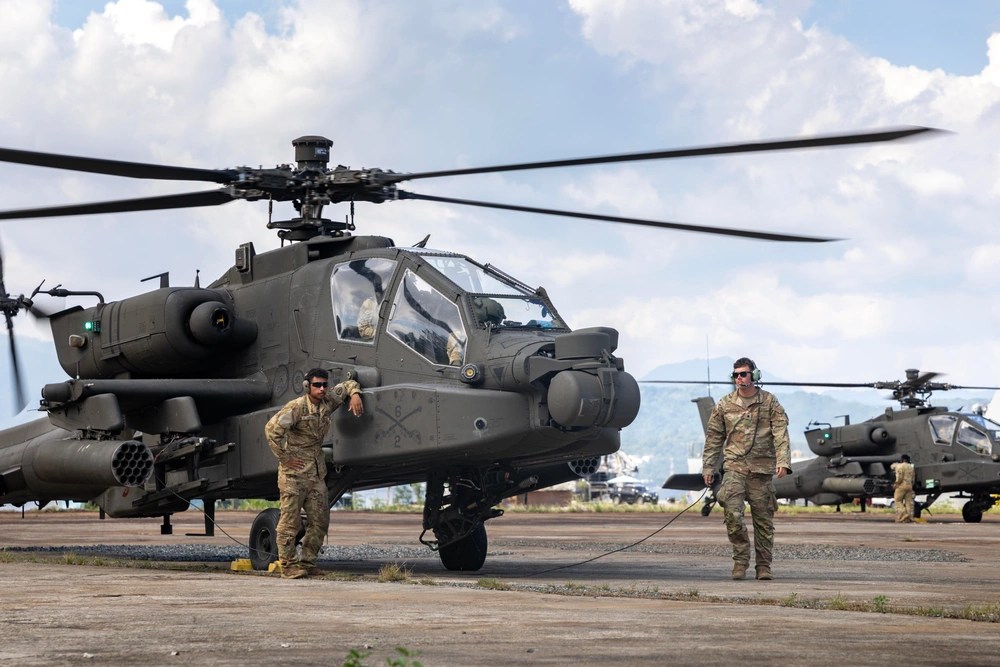
Photo: Courtesy of DVIDS. SGT Tyler Wassmer. 20 August 2026. 2nd Infantry Division/ROK-U.S. Combined Division.