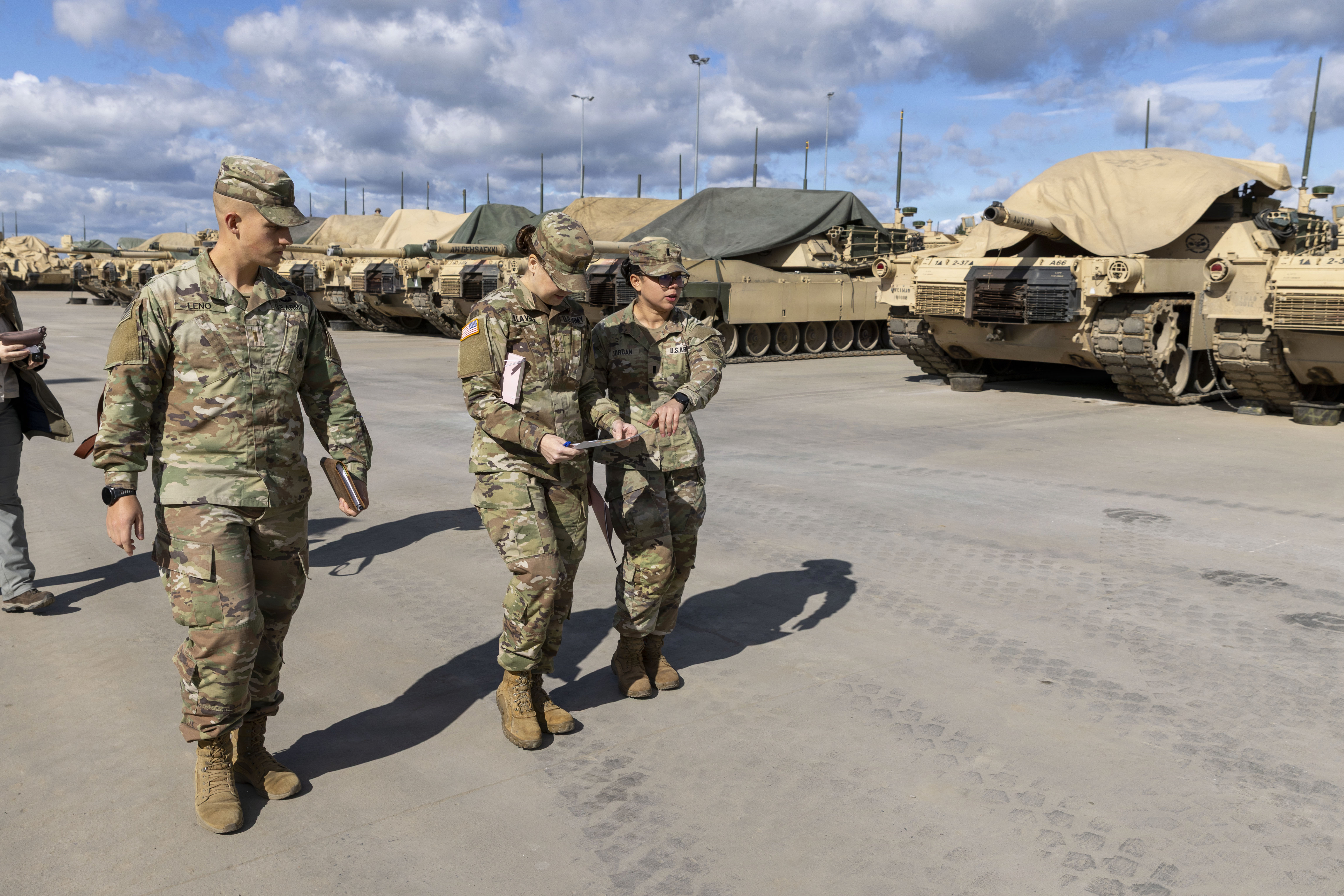
Tanks and Paratroopers: Lessons from JRTC

The Joint Readiness Training Center (JRTC) at Fort Polk, Louisiana, presents a unique challenge when armored units support light infantry formations. The terrain is heavily wooded, visibility is limited, and mobility is often restricted to roads, trails, villages, and open drop zones. In this environment, tanks provide tremendous firepower, mobility, and protection, but they are also highly visible, difficult to sustain, and vulnerable when operating without infantry support. It clearly requires a combined arms team to be successful.
As the platoon leader of the only tank platoon attached to a brigade from the 82nd Airborne Division, I observed firsthand both the advantages and challenges of integrating heavy armor with a light infantry force. These are some of my takeaways from a tremendous training and learning experience.
Linkup Challenges
Our mission began after 82nd Airborne forces parachuted into the training area. My tank platoon (which would have theoretically flown into the airhead) was tasked to link up with them and provide armored support.
A major challenge emerged immediately: our vehicle radios were not compatible with many of the infantry radios. Communication relied heavily on digital systems or face-to-face coordination. Although this problem was known before the exercise, insufficient planning and rehearsals led to confusion and delays. The experience reinforced the importance of establishing clear linkup procedures before operations begin. The learning and adaptation had to start immediately!
Acting on Limited Information
While waiting to connect with battalion headquarters, a local infantry unit requested immediate assistance against an enemy BMP (a tracked infantry fighting vehicle) that was firing on friendly forces.
Using information from a paratrooper on the ground, my tanks quickly located and destroyed the vehicle. Afterward, I learned that enemy forces threatened a nearby village that was a key objective for the battalion. Understanding the village’s importance, I moved the platoon forward to reinforce the position.
Because I lacked a clear picture of friendly locations, I brought an infantry soldier on my tank riding directly in the loaders hatch to help identify friendly forces and terrain as we advanced. This simple decision greatly improved situational awareness, alleviated the radio communications challenges, and reduced the risk of friendly fire.
Once established in the village, we coordinated with surviving infantry, integrated obstacle plans, and prepared for further attacks. Although we were eventually ordered to withdraw, our presence helped delay enemy forces and support the battalion’s mission. The mobility, survivability, and firepower of tanks provided an immediate impact on the success of the light infantry battalion.
Tanks Need Infantry
Later in the rotation, a small group of paratroopers became separated from their unit and ended up within our perimeter. Rather than operating separately, we integrated them into our defense. The infantry established observation positions forward of the tanks, providing early warning and security against enemy dismounted forces.
This experience highlighted a basic combined arms lesson: tanks are extremely powerful but vulnerable to close infantry threats. Infantry extends a tank unit’s ability to detect and defeat enemy forces before they can get close. This also allows the tanks to remain in better cover and concealment until they are needed to bring down the hammer of the awesome firepower they possess.
Maximizing Tank Effects
One of the most significant events occurred during a large defensive battle known informally as “fight night.” The terrain included a large open drop zone surrounded by woods. From elevated positions overlooking the open ground, my tanks could engage enemy vehicles at long range.
Over the course of the night, two tanks effectively controlled one side of the drop zone, destroying numerous enemy vehicles before they could reach friendly positions. This battle demonstrated the primary advantage tanks bring to a light infantry formation: long-range direct fire capable of stopping enemy armored attacks before they threaten friendly troops.
However, the fight also revealed leadership lessons. At one point, I rapidly repositioned based on an order, assuming suitable firing positions existed where I was sent. After arriving, I discovered terrain and tree lines blocked observation of the assigned sector. Better reconnaissance and map analysis beforehand would have identified the problem and prevented my tanks from becoming ineffective.
The lesson was clear: move quickly, but never faster than your understanding of the terrain.
Fuel Is a Combat Problem
The greatest challenge throughout the rotation was fuel. It can be hard to help a light infantry brigade understand the critical role of fuel in maintaining the capability of their heavy metal brothers and sisters.
A tank platoon consumes enormous amounts of fuel compared to a light infantry unit. While infantry vehicles could operate for days on a single refuel, tanks required constant resupply. Because our fuel support depended heavily on the supported brigade’s logistics network, conserving fuel became a daily concern.
We minimized engine run time and relied heavily on auxiliary power units whenever possible. Future battlefields will likely make fuel distribution even more difficult because fuel vehicles are easily detected and targeted.
This reinforced an important point: sustainment is not just a battalion or brigade problem. Decisions made at the platoon level regarding fuel usage, concealment, and vehicle management directly affect a unit’s combat effectiveness.
Key Takeaways from the Rotation:
1. Heavy-light integration works. Tanks provide significant firepower and protection that can dramatically increase a light infantry unit’s combat power.
2. Communications must be planned and rehearsed. Linkup procedures cannot rely on technology alone.
3. Terrain drives employment. At JRTC, dense forests, limited visibility, villages, and narrow road networks heavily influence where tanks can fight effectively.
4. Tanks and infantry are strongest together. Infantry protects tanks from close threats, while tanks provide long-range firepower and shock effect.
5. Leaders must make timely decisions. In chaotic conditions, waiting for perfect information is often worse than making a sound decision based on what is known.
6. Sustainment matters. Fuel, maintenance, camouflage, and vehicle management can have operational-level effects even when controlled by platoon leaders.
Conclusion
JRTC provides a valuable opportunity to test how armored and light infantry forces operate together under realistic conditions. Although tanks face challenges in the wooded terrain and demanding sustainment environment, their firepower and mobility can be decisive when properly integrated with infantry forces. The experience reinforced the importance of combined arms teamwork, tactical initiative, and disciplined leadership under pressure.
Author Bio: 1LT Ben Phocas is a platoon leader with 2nd Brigade, 3rd Infantry Division.
Photo: Courtesy of DVIDS. 26 March 2024 by PFC Luciano Alcala.